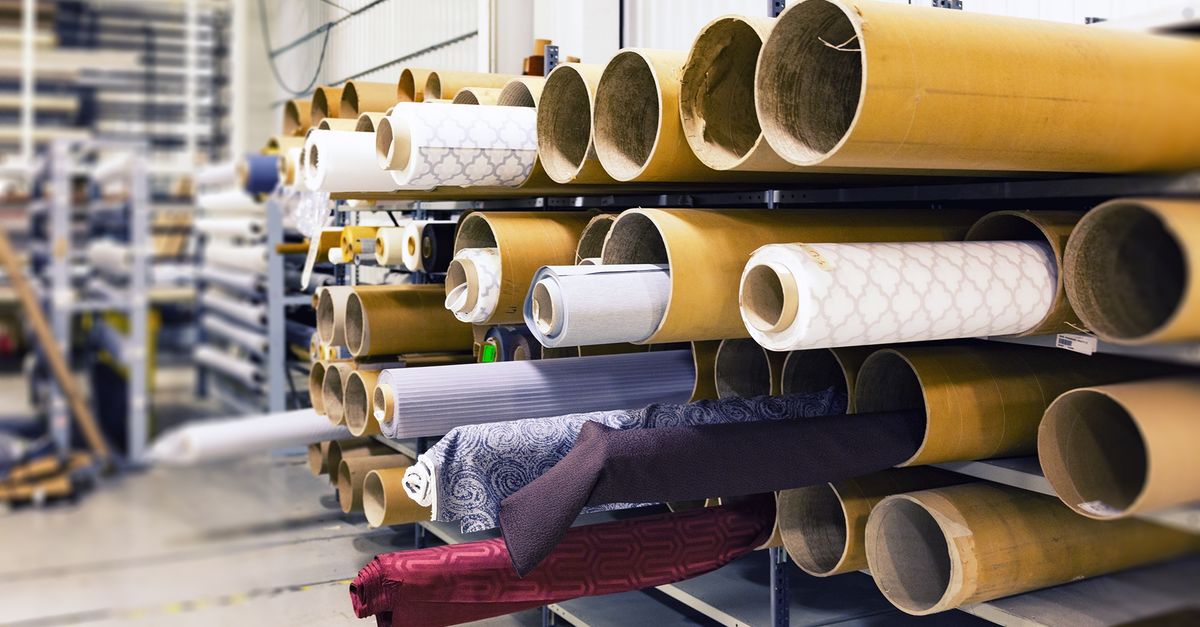
Surat moves an enormous share of India's man-made fabric, and almost none of that trade fits neatly into a standard billing app. A cloth merchant in Ring Road or the Millennium Market isn't selling numbered SKUs off a shelf — they're dealing in thaans and takas, sending grey cloth out for dyeing and printing, settling weaver and karigar accounts, and running party ledgers that stretch across months. When the software doesn't understand any of that, the trader ends up keeping the real business in a diary and using the computer only to print a GST invoice.
This guide is about closing that gap. We'll look at why generic billing (Tally set up as-is, or Excel) breaks down for textile, how a Surat trading workflow actually flows from grey to finished cloth, which features genuinely matter, and how to think about cost when you're choosing a system.
Why generic billing software fails textile traders
Tally and spreadsheets aren't bad tools — they're just built around a general assumption: you buy an item, you hold it, you sell the same item. Textile trading doesn't work like that. The cloth that leaves your godown is rarely the cloth you bought. It changed hands with a dyer, a printer, an embroidery unit, and came back with added value, wastage, and a job work bill attached. A flat item master can't represent that journey.
- Units don't match reality — you buy and sell in thaan, meters, and taka, but generic tools push you into one unit and force mental math on every entry.
- Grey and finished are treated as the same stock, so you can't see what's lying at the dyer versus what's ready to sell.
- Job work (dyeing, printing, embroidery) has nowhere to live — the material you sent out simply disappears from your books until it returns.
- Weaver, karigar and broker accounts get squeezed into generic ledgers with no link to the goods they relate to.
- GST on textiles and e-way bills need manual attention, which is exactly where mistakes and penalties creep in.
- Everything important ends up back in a diary, which means no reliable stock position and no real control over leakage.
The real cost isn't the software — it's the leakage
When grey cloth sitting at a dyer isn't tracked, when job work wastage isn't reconciled, and when party outstanding lives in someone's memory, small losses add up quietly every month. Textile-specific software pays for itself less by saving typing time and more by making that leakage visible.
How a Surat textile workflow actually flows
To judge any software, you first have to be honest about the workflow it needs to support. A typical Surat trading and job work cycle looks like this:
Grey cloth in
You buy grey (unfinished) fabric from weavers or the grey market, usually measured in taka or meters. This grey stock has value, but it isn't sellable yet. The software needs to hold it as a distinct category — not lumped in with finished goods — with quantities in the units you actually trade in.
Out for job work
Grey goes out to a dyeing house, a printer, or an embroidery karigar. This is the step generic tools miss completely. You need to record what quantity went to which unit, against which challan, what process was ordered, and what came back — including shortage or wastage. Until it returns, that material is still your stock, just parked at a third party.
Finished cloth in and out
Processed cloth returns as finished stock — dyed, printed, or embroidered sarees and dress material ready to sell. Now you invoice buyers, often through a broker, in thaan or meters, and generate GST-compliant bills and e-way bills where required.
Accounts that never close cleanly
Running underneath all of this are the relationships that define the trade: weaver and karigar accounts for material and labour, broker commissions on sales, angadia entries for cash and parcels moving between cities, and party ledgers where buyers pay in parts over weeks. These aren't a side ledger — for most traders they are the business.
GST and e-way bills on textiles
Most fabric and made-ups fall under a 5% GST slab, though rates vary by product and can change, so always confirm the current rate and HSN for your specific goods on the official GST portal. Two things trip textile traders up in practice: applying the correct rate and HSN consistently across a huge range of items, and getting e-way bills right for interstate and higher-value movements — including goods you send out for job work, not just sales.
- 1Tag every item with the correct HSN and GST rate once, so invoices stay consistent instead of relying on memory.
- 2Generate the e-way bill from the same invoice or job work challan, rather than re-keying details into the e-way bill portal.
- 3Keep a clean record of goods sent for job work and returned, since that movement can require documentation too.
- 4Reconcile your sales register with what's filed, so GST return time isn't a scramble.
Want software built around grey, job work, and party ledgers — not forced onto a generic template? See how our Surat textile ERP is set up.
Explore Textile ERP for SuratMust-have features (and why each one matters)
Not every feature carries the same weight. Here's a practical checklist of what genuinely matters for a Surat cloth merchant, and the reason behind each.
| Feature | Why it matters |
|---|---|
| Thaan / meters / taka units | Bill and hold stock in the units you actually trade in, without converting in your head on every entry. |
| Grey vs finished stock | See separately what's raw, what's out for processing, and what's ready to sell — so your stock position is real. |
| Job work tracking | Follow material sent to dyers, printers and embroidery units, and reconcile what returns versus wastage. |
| Weaver & karigar accounts | Link material and labour to the people behind it, so dues are clear instead of buried in a general ledger. |
| Broker & commission handling | Track sales made through brokers and calculate commission automatically instead of settling it by memory. |
| Party ledgers & outstanding | Know exactly who owes what and for how long, which is where most working capital quietly gets stuck. |
| GST invoicing with HSN | Apply the correct rate and HSN consistently and produce compliant bills without manual lookups. |
| E-way bill support | Create e-way bills from the same document instead of re-entering details on a separate portal. |
| Angadia / cash entries | Record parcels and cash moving between cities the way the trade actually operates. |
| Wholesale & retail billing | Handle bulk trade pricing and counter sales from one system rather than two disconnected tools. |
How the right software saves time and stops leakage
The time savings are real but simple: units and HSN are set once, invoices and e-way bills come from the same screen, and party statements print instead of being tallied by hand. The bigger win is control. When grey stock at a dyer is on the books, when returned job work is reconciled against what was sent, and when every party's outstanding is one click away, the quiet losses that a diary hides become visible. You can chase overdue parties on time, question unusual wastage, and stop discovering shortages only at stock-taking.
The point of textile software isn't fancy dashboards — it's that the cloth on your books matches the cloth in your godown and at your dyer, every day.
What it costs and how to choose
Our Textile ERP for Surat starts at ₹49,999. What a project actually costs depends on how much you need — the number of users, whether you want job work and broker modules from day one, any migration from an existing diary or Tally setup, and training for your staff. We'd rather scope that honestly with you than quote a flat number that hides surprises later.
When you compare options, weigh these:
- Does it understand grey vs finished stock and job work out of the box — or will you be forced to work around it?
- Can it bill in thaan, meters and taka natively?
- Does it produce GST invoices and e-way bills without double entry?
- Are party, weaver, karigar and broker accounts first-class, not afterthoughts?
- Is the pricing clear, and does it include migration and training, or are those extra?
- Can your staff actually use it — in the workflow they already know?
A quick word of honesty
No software fixes a process nobody follows. The traders who get the most out of a system are the ones willing to enter job work challans and party payments consistently for the first few weeks. Once that habit forms, the visibility it gives back is hard to give up.
Wizix is a software agency based in Hyderabad, serving businesses across India, and our Textile ERP is built specifically for how Surat's cloth trade works. If you're weighing up a move off Excel or a stock-Tally setup, we're happy to walk through your actual workflow first and tell you honestly whether it's the right time to switch.
Frequently asked questions
Which billing software is best for textile traders in Surat?+
The best fit is software built around the textile workflow — grey vs finished stock, job work tracking, thaan/meters/taka units, and party/weaver/broker accounts — rather than a generic billing tool. Wizix's Textile ERP for Surat is designed around exactly this, and starts at ₹49,999.
Does it handle job work like dyeing, printing and embroidery?+
Yes. You record grey cloth sent to a dyer, printer or embroidery unit against a challan, track the quantity and process, and reconcile what returns against wastage or shortage. The material stays on your books while it's out for processing.
Can it separate grey and finished stock?+
Yes. Grey (unfinished) and finished cloth are held as distinct stock, and material out for job work is tracked separately too — so at any point you can see what's raw, what's being processed, and what's ready to sell.
Does it generate GST invoices and e-way bills for textiles?+
Yes. Items carry their HSN and GST rate, so invoices stay consistent, and e-way bills can be generated from the same invoice or job work challan instead of re-entering details separately. Always confirm current rates and HSN for your goods on the official GST portal.
Does it work for both wholesale and retail?+
Yes. It handles bulk wholesale trade — including broker sales and commission — as well as counter retail billing, from one system rather than two disconnected tools.
How much does textile billing software cost?+
Wizix's Textile ERP for Surat starts at ₹49,999. The final cost depends on users, the modules you need (like job work and broker handling), data migration, and staff training. We scope it transparently rather than hiding extras.
Can it run on mobile?+
The system is designed to be usable on mobile so you can check stock, party outstanding and billing on the go, not only from a desk. We'll confirm the exact mobile setup for your requirements during scoping.
Can it manage weaver, karigar, broker and angadia accounts?+
Yes. Weaver and karigar accounts for material and labour, broker commissions on sales, and angadia entries for cash and parcels between cities are all part of the workflow rather than forced into generic ledgers.
Related Wizix solutions
Sources & references
Ready to get started?
Get honest advice and a clear, no-obligation quote from the Wizix team.
Get a free quote